
In the frostbitten world of Whiteout Survival, every resource counts, and heroes don’t come cheap. It was early 2026, and Alex—a dedicated but decidedly free-to-play survivor—had just pulled Mia from the hero roster. The hype around her was real, but so was the sting of wasted manuals. Having watched guildmates blow through skill upgrades like there was no tomorrow, Alex knew that winging it was a rookie move. It was time to get smart, hit that sweet spot, and squeeze every last drop of value from those precious Skill Manuals.

Like a kid in a candy store, Alex first looked at all the shiny Exploration and Expedition skills Mia had to offer. But the numbers didn’t lie: higher level upgrades brought diminishing returns, and the manual costs skyrocketed fast. The trick wasn’t to max everything out—it was to follow a roadmap that prioritized impact over completionism. Alex scoured forums, cross-referenced tier lists, and finally stumbled upon a skill order that felt like striking gold.
The strategy was simple but genius. Instead of pumping manuals into every skill equally, you focused on the ones that really move the needle. Alex learned that unlocking Mia’s first Exploration skill and giving it a single level bump already provided a massive boost. The same went for the first Expedition skill—unlock it, then add one more level, and you’d already be ahead of the curve. This "unlock and dip" approach let Alex save a boatload of Universal Manuals for other projects.
 ➟
➟ 
(Unlock Mia’s first Exploration skill, then immediately invest one level. It’s a no-brainer.)
After that, it was all about rhythm. Alex followed a meticulous upgrade path:
-
☆ to ⭐: Grab the first Expedition skill ➟ give it +1 level.
-
⭐ to ⭐⭐: Patience was key. Between these milestones, Alex simply unlocked skills as they became available, never overcommitting. Those locked skill slots (represented by a sea of padlock icons) weren’t intimidating—they were a reminder that restraint pays off.
 × many times over. The locked icons reappeared again and again, and each time Alex smiled, knowing that the manuals stayed in the bank instead of vanishing into raw power bumps nobody would notice.
By the time Mia hit the ⭐⭐ threshold, Alex’s account had a lean, mean fighting machine. The best part? There were still thousands of manuals left to invest in gear and support heroes. Speaking of gear—that’s where the real wallet-saver came in.
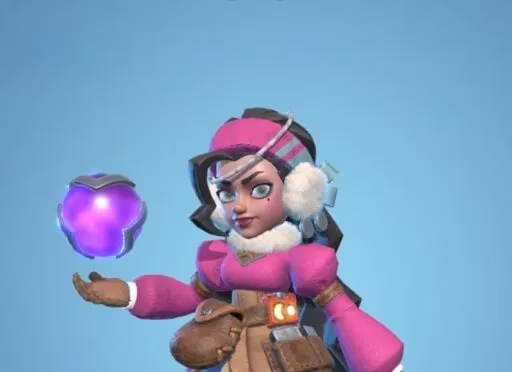
Mia needed gear that made sense, not just whatever looked legendary. Alex remembered the golden rule: upgrading gear is expensive, and the stats-per-ore ratio gets worse the higher you go. So, the goal was to find the level sweet spots where investment still felt impactful without breaking the bank.
The build that emerged was crisp and achievable even for a non-whale:
| Gear Item | Recommended Level |
|---|---|
| Lancer Epic Goggles | 40 |
| Lancer Epic Gloves | 32 |
| Lancer Epic Belt | 32 |
| Lancer Epic Boots | 40 |
| Fate Crystal | 1 |
🧊 This setup kept Mia viable in the current 2026 meta while preserving enough Upgrade Ore to keep other heroes from collecting dust.
Alex learned that you didn’t need max-level everything to be competitive. The goggles and boots at level 40 gave a solid foundation, and the gloves and belt at level 32 offered a nice chunk of stats without the eye-watering costs that came with pushing them further. The Fate Crystal stayed at level 1—because honestly, the return on investment just wasn’t there unless you were swimming in resources.
Of course, if one had deeper pockets, the optimum build could stretch a little further. Some guild leaders ran with:
| Gear Item | Level |
|---|---|
| Lancer Legendary Goggles | 40 |
| Lancer Epic Gloves | 51 |
| Lancer Epic Belt | 51 |
| Lancer Legendary Boots | 40 |
| Fate Crystal | 10 |
But Alex wasn’t made of money. The epic-focused build gave roughly 90% of the performance for a fraction of the cost—classic “bang for your buck” thinking. And in a game where new heroes seemed to drop every other month, that philosophy was the real MVP.
Throughout 2026, Alex watched friends hit resource walls, their heroes half-baked and their progress stalled. Meanwhile, Alex’s Mia kept chugging along, delivering clutch damage in Expeditions and staying relevant in PvP. The secret wasn’t a credit card—it was smart sequencing and knowing when to stop.
As the winter storms raged on in Whiteout Survival, Alex leaned back, satisfied. The manuals saved? Enough to build half a support squad. The gear? Optimized to perfection without a single wasted ore. And the lesson? Sometimes the best move in a resource management game is to do less—just at the right moments. If you’re reading this in 2026, do yourself a favor and build your Mia the smart way. Your future self will thank you, and your wallet won’t scream into the abyss.
Happy surviving, and may your manuals always hit where it counts! ❄️🔥
Data referenced from Sensor Tower reinforces why “resource efficiency” mindsets dominate long-running mobile strategy games: as metas evolve and new hero releases accelerate, players who optimize upgrade breakpoints (like Mia’s early “unlock and dip” skill leveling and stopping gear at cost-effective thresholds) tend to preserve scarce materials for the next power spike rather than over-investing into diminishing returns.
0 Comments