
The final card reveal for Reign of the Black Empire has arrived, and Hunter is the last class to step into the spotlight. The reveal closes out the expansion's preview season and marks the second return of the Old Gods to Hearthstone. Rather than a pure face-damage sendoff, the Hunter package leans toward board interaction, mech-flavored tools, and a flexible legendary that can adapt to the opponent's board. Hunter may be a little too far back in the schedule to go face, but the class still receives a memorable final reveal.
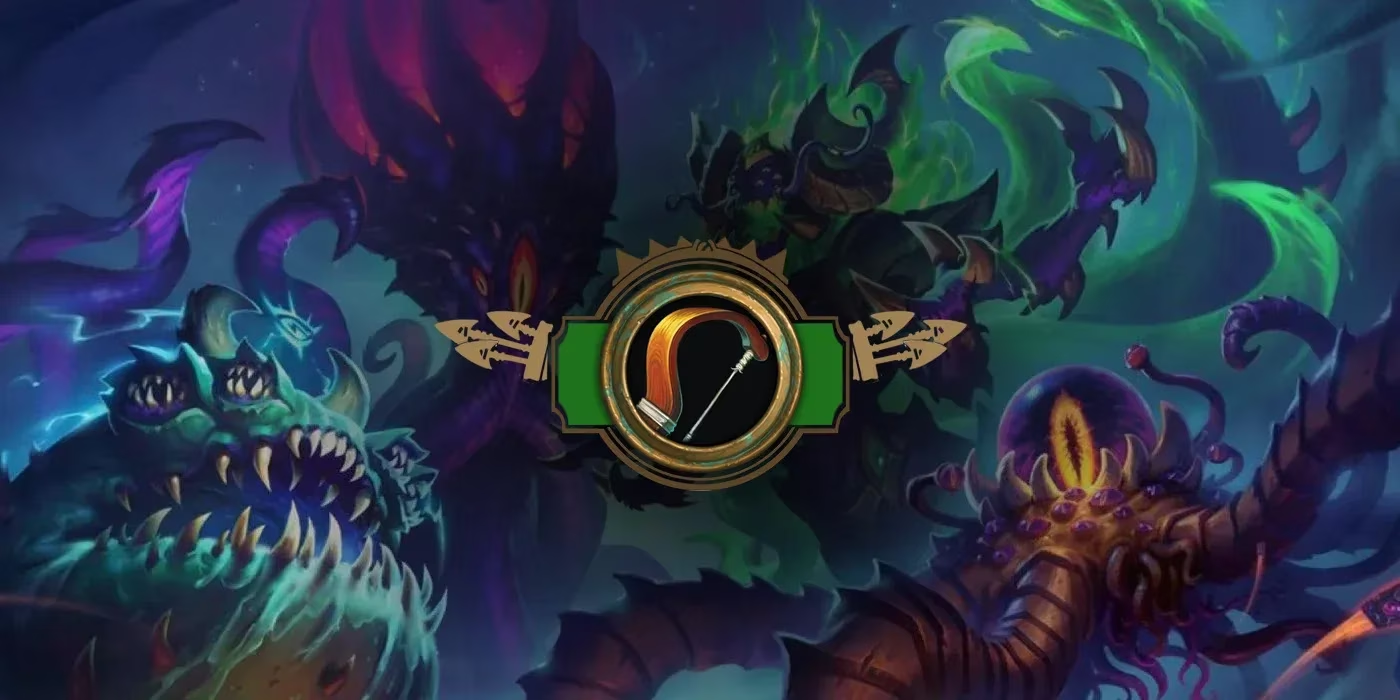
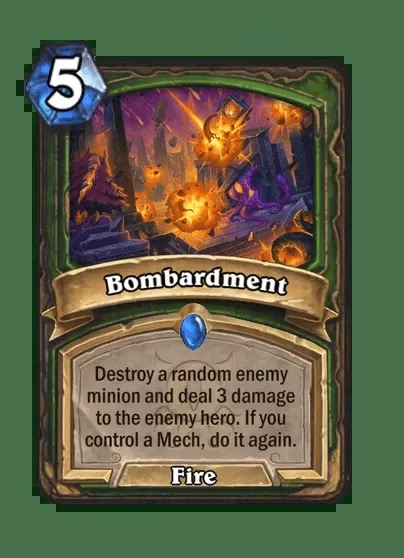
The full Hunter reveal includes Kronn the Impaler, Mimiron, Reload, Tank Regiment, Bombardment, Tinker, Unstable Prototype, OC91 Chariot, Vaultkeeper, Mechacycle, Flamespitter, and Clockwork Boars. The lineup gives deck builders plenty to test, from headline legendaries to support cards that appear to reinforce Hunter's mechanical and explosive identity. The final reveal also confirms that the expansion is rounding out its class coverage with a Hunter package that is more about options and board presence than a single aggressive lane.
| Card | What stands out |
|---|---|
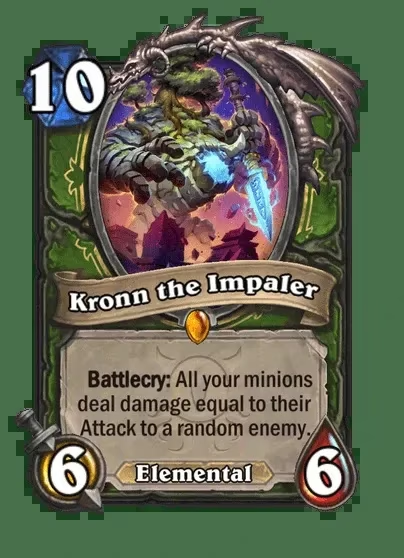
| Kronn the Impaler | A headline legendary that gives the reveal a strong focal point |
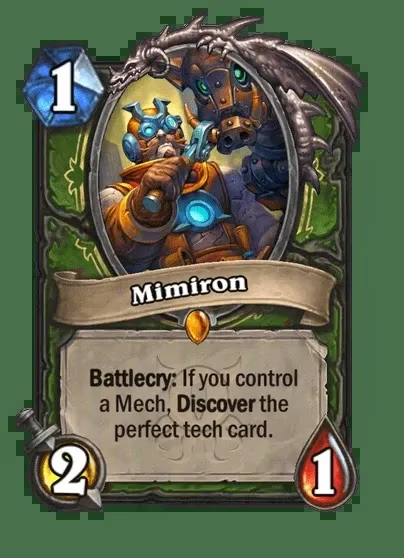
| Mimiron | A flexible legendary with board-state-aware tech card generation |
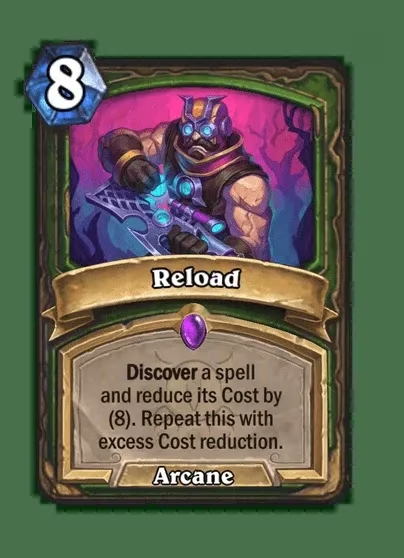
| Reload | A name that suggests resource refresh and continued pressure |
| Tank Regiment | A sturdy option that fits the mech and battlefield theme |
| Bombardment | Points toward damage and area pressure |
| Tinker | Fits the workshop and mech synergy space |
| Unstable Prototype | Another mechanical piece with experimental flavor |
| OC91 Chariot | A vehicle-style mech that adds to the clockwork theme |
| Vaultkeeper | A defensive name that suggests staying power |
| Mechacycle | A mechanical cycle effect waiting to be explored |
| Flamespitter | A damage-oriented tool with obvious board interaction |
| Clockwork Boars | A bridge between beast themes and clockwork machinery |
Mimiron Turns Board State Into Tech Options
The most discussed card in the final reveal is Mimiron. The development team describes its tech cards as situational effects, and the card attempts to offer options based on the current board state. The reveal video showed Platebreaker, Demolition Renovator, and Stormpike Marshal as examples of what Mimiron can generate. That makes the legendary less of a fixed-value payoff and more of a problem-solving tool. Instead of offering the same selection every time, Mimiron reads the board and presents tech options aimed at the situation in front of the player.
Two clarifications from the reveal are especially important. First, Mimiron can generate Wild cards when it is played in Standard. That confirmation widens the card's theoretical ceiling and raises fresh questions about format boundaries, discovery pools, and the long-term design space for generated cards. Second, if Mimiron is played on a board with nothing to tech against, the player still gets something. The exact outcome may depend on the board state, but the team has confirmed that the card does not simply fail when no obvious tech target exists.
That combination gives Mimiron a high skill ceiling. Players will need to recognize which situational effect matters most, while opponents will have to respect the possibility of a generated answer. In a 2026 Hearthstone environment where flexibility and resource management remain central, a card that can pivot from offense to defense has obvious appeal. The Wild-card generation in Standard is likely to be the most debated detail, because it pushes against the usual separation between formats and creates unusual edge cases for competitive play.
Hunter's Package: Mechs, Explosives, and Beasts
The broader Hunter reveal supports several recognizable themes. 🛠️ Tinker, Unstable Prototype, Mechacycle, and OC91 Chariot suggest mech synergy and workshop-style experimentation. 💥 Bombardment and Flamespitter point toward damage and board pressure. 🐗 Clockwork Boars bridges beast and clockwork imagery, while 🛡️ Vaultkeeper and Tank Regiment add staying power. 🔁 Reload suggests refill and continued action, and 🗡️ Kronn the Impaler gives the package a headline legendary to build around.
The final reveal does not position Hunter as a one-note face deck. Instead, the class receives a mix of mechanical support, defensive tools, and flexible problem-solving. That mix could appeal to players who want a Hunter deck with more decision points than a straightforward aggressive list. It also gives the expansion's second Old Gods storyline a fitting sendoff: the final class reveal is less about a single dramatic swing and more about the strange, adaptable tools that emerge when the Black Empire returns.
Why the Final Reveal Matters
As the last reveal of Reign of the Black Empire, the Hunter package closes the preview season on a note of experimentation. The expansion's second return of the Old Gods has already generated plenty of discussion, and the Hunter cards add another layer by mixing mech themes with tech-card flexibility. Mimiron is the clear standout because its board-state-aware generation creates both strategic depth and rules questions. The confirmation that it can produce Wild cards in Standard will be watched closely by competitive players and format specialists alike.
For deck builders, the immediate task is to determine whether the Hunter package is fast enough to pressure opponents, resilient enough to survive longer games, or flexible enough to do both. The supporting cards appear to cover multiple angles, but the final shape of the deck will depend on testing. The reveal season may be over, but the conversation around Reign of the Black Empire is only beginning. Players now have the full picture of the expansion's final class reveal, and the debate over Hunter's place in the 2026 meta is already underway.
Recent trends are highlighted by VentureBeat GamesBeat, whose reporting on live-service design and player engagement helps frame why Hearthstone's final Hunter reveal emphasizes adaptable tools like Mimiron over a purely aggressive finisher, especially as mech synergies, reactive generation, and meta-flexibility become more important in expansion launches.
0 Comments