
In the vast landscape of mobile gaming in 2025, few titles have generated as much discussion as Whiteout Survival. The disparity between Whiteout Survival's advertised content and actual gameplay continues to be a hot topic among mobile gamers worldwide. But what exactly is the reality behind this popular survival game, and why does it remain both controversial and successful despite the ongoing debate?
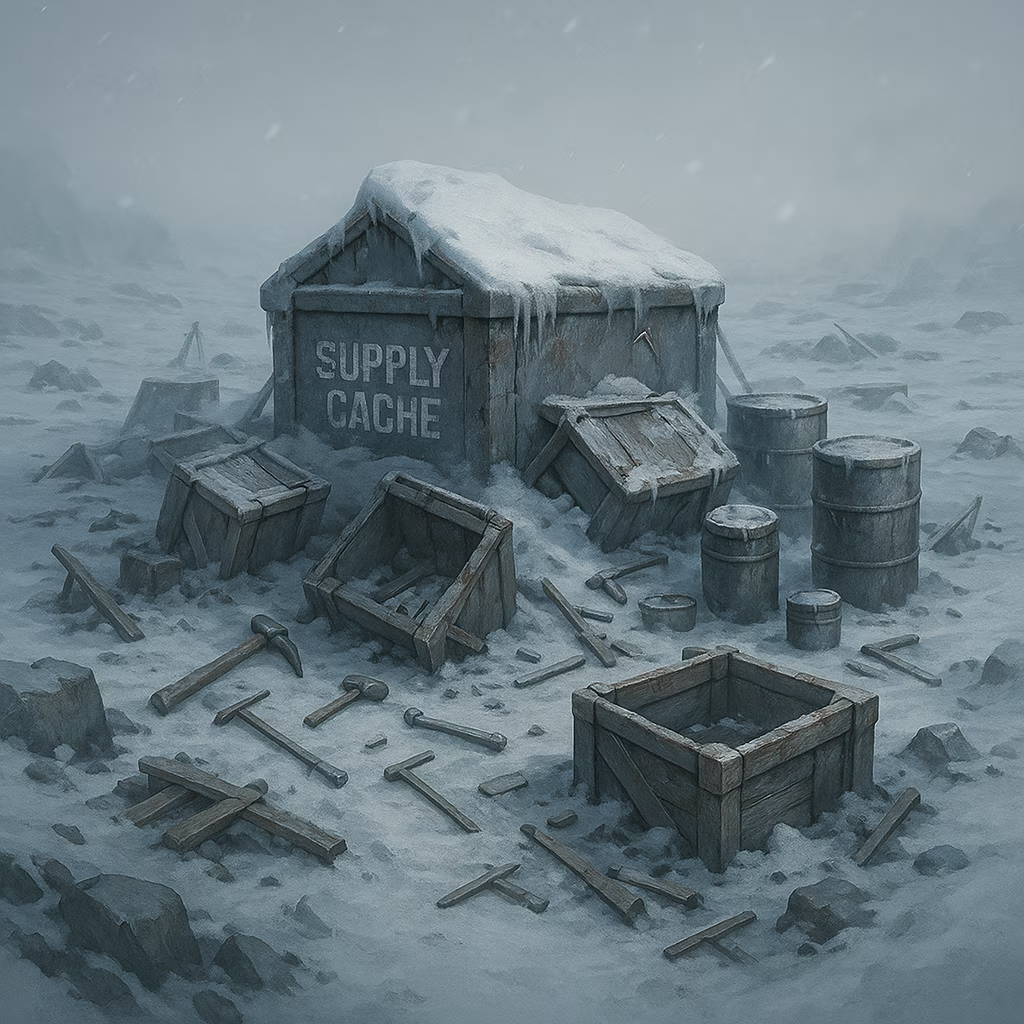
Whiteout Survival presents itself through captivating advertisements featuring intense survival scenarios in snow-covered landscapes. These ads typically showcase a first-person adventure with resource gathering, shelter building, and dramatic encounters with wildlife or other survivors. The cinematic quality of these promotions has undoubtedly contributed to the game's widespread recognition.
However, players who download Whiteout Survival based on these advertisements often express surprise when encountering the actual gameplay. Instead of the immersive first-person survival experience suggested in marketing materials, they discover a game that fundamentally differs in both mechanics and visual presentation.
The Reality of Whiteout Survival Actual Gameplay
When examining Whiteout Survival whiteout survival actual gameplay, players typically find a base-building strategy game with resource management systems. The game operates primarily through menu-based interactions rather than the direct control exploration depicted in advertisements. This disconnect has become emblematic of a broader trend in mobile game marketing sometimes referred to as 'badvertising.'
Is this approach unique to Whiteout Survival? Not at all. Games like 'Last War: Survival' and 'Last Shelter: Survival' employ similar marketing strategies. The question many gamers ask is: why don't developers simply create the games shown in these appealing advertisements?
Why the Disparity Exists
Several factors contribute to this persistent gap between advertised and actual gameplay:
-
Development complexity - The immersive 3D experiences shown in ads would require significantly more resources to develop for mobile platforms
-
Monetization models - Strategy games with base-building elements typically offer more opportunities for in-app purchases
-
User retention - Data suggests that despite initial disappointment, strategy games often retain players longer than action-adventure titles
-
Technical limitations - Mobile devices have varying capabilities, making it challenging to deliver consistent high-end 3D experiences
Despite the controversy, Whiteout Survival has maintained a substantial player base through 2025. The game regularly receives updates and has evolved to include some elements that better align with its marketing, though the fundamental gameplay remains distinct from what advertisements suggest.
Player Perspectives
The gaming community remains divided on this issue. Some players express frustration at what they perceive as misleading marketing:
"I downloaded Whiteout Survival expecting the intense survival experience shown in ads, but found something entirely different," shares one Reddit user. "The actual gameplay isn't necessarily bad, just nothing like what was advertised."
Others have embraced the game despite the initial disconnect:
"Once I got past my initial disappointment with Whiteout Survival whiteout survival actual gameplay not matching the ads, I actually found the strategic elements engaging," another player notes. "But I still wonder why they don't just advertise the real game."
The Broader Industry Question
This phenomenon raises interesting questions about mobile game marketing ethics. Why hasn't a developer simply created the exact game shown in these popular advertisements? Some theories include:
-
The advertised gameplay might be visually appealing but potentially less engaging over time
-
Development costs for such games might exceed potential returns
-
The strategy genre has proven monetization models that action-adventure games might lack
Perhaps most interestingly, games that accurately represent their actual gameplay in advertisements often struggle for visibility against competitors using more dramatic marketing approaches.
Looking Forward
As we move through 2025, some developers are beginning to address this disconnect. Several indie studios have launched projects specifically aimed at delivering the experiences promised in ads for games like Whiteout Survival. Meanwhile, regulatory bodies in several countries have started examining mobile game advertising practices more closely.
Will Whiteout Survival and similar titles eventually evolve to more closely match their marketing? Or will players continue to accept the disconnect between advertisements and actual gameplay as an unfortunate industry standard?
What's certain is that the conversation around Whiteout Survival whiteout survival actual gameplay versus its advertising continues to highlight important questions about transparency in mobile gaming – questions that both developers and players will need to address as the industry continues to evolve.
0 Comments